
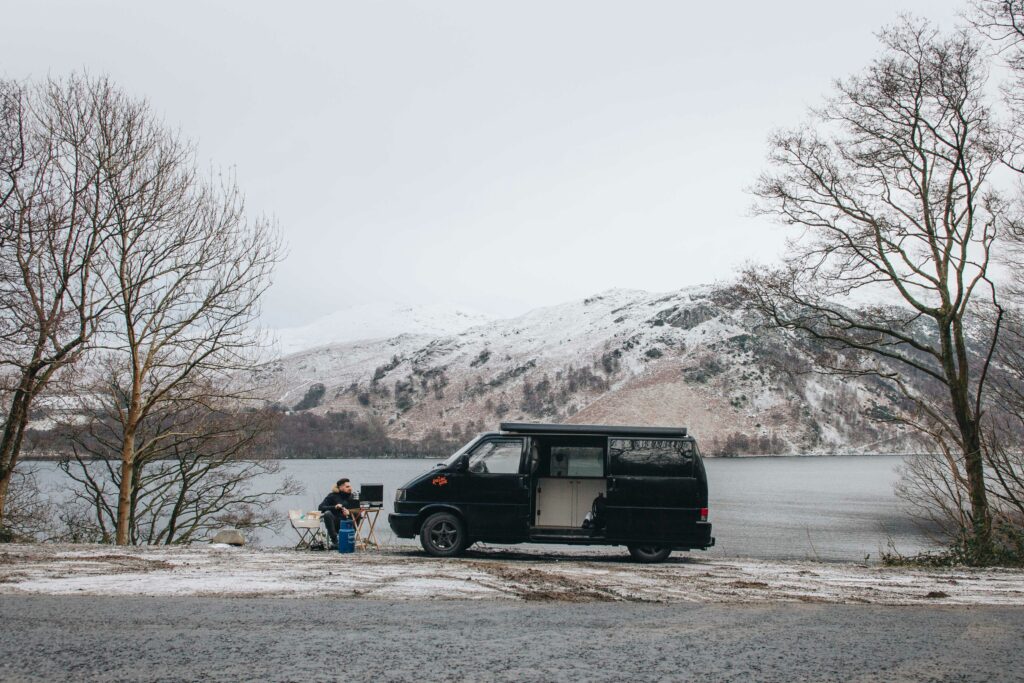
Winter RV Living Requires a Smarter Approach
Winter RV living can be serene, with snow-covered views that will make you fall in love with the RV living lifestyle all over again. But, once the temps go down, there’s a strategy to staying warm and beating the “winter blues.” You want to be comfortable without wasting resources and burning through propane, draining your battery, or even running the generator nonstop.
The good news is that with ABC Upfitter’s help, the right prep, and a few thoughtful upgrades, you can enjoy winter RV living without having to sacrifice your comfort or much-needed power. Here’s how to stay warm in an efficient way without losing power.
Understand How RVs Lose Heat
When you think of a traditional home, it insulates heat. RV’s aren’t built in the same way and it might lose heat faster than you would expect. Common cold spots include: windows, slides, and floors. When warm air starts to escape, your heater has to work even harder. This means a higher power draw and, in turn, a shorter battery life.
Helpful Insulation Upgrades
Before you race to the thermostat to add more heat, you can tighten things up:
- Use reflective window covers to block drafts
- Hang thermal curtains around the bed
- Add weather stripping to seal any potential leaks
- Check door and slide seals for gaps
- RV Skirting
Even small insulation upgrades like these can make a noticeable difference on cold nights.
Choosing the Right RV Heater
Not all heaters are equal—especially when you’re camping off-grid. Here’s how common heating options compare:
- Diesel Heaters
A favorite among boondockers. They’re incredibly efficient, consume very little power, and put out consistent heat. These heaters are perfect for winter rv living. - Propane Furnace
Powerful but energy-hungry. The fan alone can drain a battery overnight in freezing temps. A propane furnace is best used sparingly or as backup to other heating methods. - Catalytic Heaters
Quiet and low-power, but require safe ventilation. Great for supplemental heat or daytime use. - Electric Space Heaters
Excellent when you’re plugged into shore power, but less ideal for boondocking unless you have a very strong battery/inverter system.
Stay Warm Without Destroying Your Battery
You don’t need to blast your furnace around the clock to stay comfortable in winter. Small daily habits make a big difference. Turning the thermostat down at night and using heavier blankets helps conserve power, while running the furnace in short intervals instead of continuously keeps your batteries from working overtime. Take advantage of natural warmth by letting sunlight heat the RV during the day, and close off unused areas to reduce the space your heater has to manage. Adding rugs can warm up cold floors, and simply layering your clothing cuts down on how much heat you actually need. These small choices add up to significant energy savings over a long winter.
Practical, actionable advice:
- Lower thermostat at night + use heavy bedding.
- Run the furnace in short cycles to conserve battery.
- Maximize passive heat from the sun.
- Close off unused spaces.
- Use rugs or floor insulation to prevent heat loss through floors.
- Layer clothing to reduce demand on heaters.

Smart Power Management for Winter
Winter puts extra strain on your RV’s power system; batteries drain faster, solar production drops, and generators often pick up the slack. That’s why smart power management becomes essential when temperatures fall. Keeping lithium batteries warm helps them perform better and charge more efficiently, and planning for lower solar output on cloudy, short winter days ensures you’re never caught off guard. Many winter campers rely on short, more frequent generator operation to top off their batteries, while regularly monitoring battery health helps you stay ahead of potential issues.
If you’re camping off-grid often, a high-quality inverter/charger and lithium system can make winter living noticeably easier. Strong, reliable power keeps your heater running consistently, reduces stress on your batteries, and supports the extra load that cold weather brings. At ABC Upfitters, we have extensive experience installing and optimizing MasterVolt systems for RVers who spend extended time off-grid. We can guide you in choosing the right components for your specific rig, handle the installation, and make sure your system is tuned for maximum performance (even in freezing conditions). Check out our technical manuals page to see how we can help you stay warm and powered on every winter adventure.
Safety Checklist for Winter RV Living
Staying warm is important; however, staying safe is non-negotiable. Always use a carbon monoxide detector and keep your propane leak detectors active to protect against hidden hazards. Make sure you’re ventilating properly when using portable heaters, and never run a generator close to windows or intake vents. Insulating your pipes and tanks helps prevent freezing, and having a backup heat source ensures you’re covered if something unexpected happens. A little caution goes a long way when you’re living in cold weather.
Ready to Upgrade Your Winter Setup?
Winter RV living doesn’t have to mean constant power struggles. With good insulation, the right heater, and smart power management, you can stay warm, efficient, and comfortable all season long.
If you want help optimizing your power system or prepping your RV’s electrical system for cold-weather, ABC Upfitters is here to help.
Reach out anytime for custom solutions, winterizing support, or heater recommendations that fit your rig and your lifestyle.
Frequently asked questions:
1. What’s the most reliable heating setup for off-grid winter camping?
It depends on your rig and how you camp, but many winter RVers benefit from a combination of efficient diesel heat and a strong lithium power system. If you’re unsure what works best for your setup, ABC Upfitters can evaluate your power needs and recommend a solution that keeps you warm without draining your batteries.
2. How can I tell if my RV’s power system is ready for cold-weather boondocking?
A good winter power system should hold a charge overnight, support your heating demands, and recover quickly with solar or generator input. If you’re noticing voltage drops, slow charging, or inconsistent heat, ABC Upfitters can run a power assessment and suggest upgrades that improve performance in freezing conditions.
3. Do I need to upgrade anything before adding skirting, insulation, or a new heater?
Sometimes. Especially if you’re relying on an older converter, weak batteries, or mismatched components. Proper heating and insulation start with a healthy power foundation. ABC Upfitters can review your current setup and help you choose the right improvements so your winter upgrades work safely and efficiently.
You May Also Like:
- Tips for Storing your Solar Powered Camper in the Winter
- How to Upgrade Batteries for Campers
- RV Tailgate Power Guide: Keep the Party Going All Day
About ABC Upfitters:
ABC Upfitters provides premium, customer-focused, upfitting services to RV clientele who are looking for the ultimate off-grid experience. The close-knit company originated from the rising demand for aftermarket Li-Ion battery upgrades for recreational vehicles. By using technical components, ABC can meet this need and provide an unmatched level of integration and quality for their customers. Contact one of the ABC team members today to learn about their services!